Each session simulates an hour of a client engagement. AI plays the client’s staff. The gym scores what the person finds out, what they build and their plan for the next two weeks.
Inside a gym case
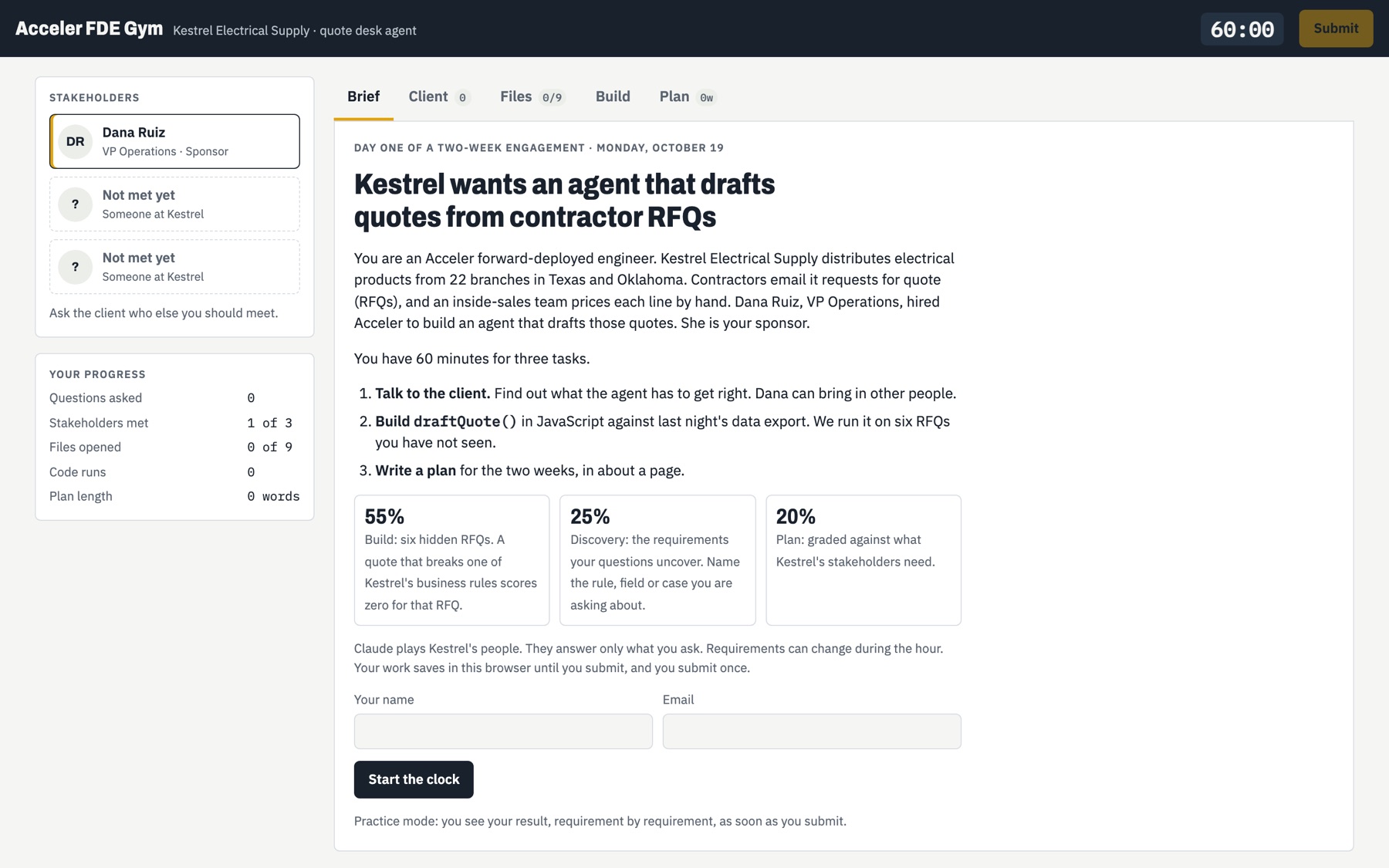
Our first case is Kestrel, a quote desk for an electrical distributor. It has:
A brief from the sponsor, who wants an agent that drafts quotes.
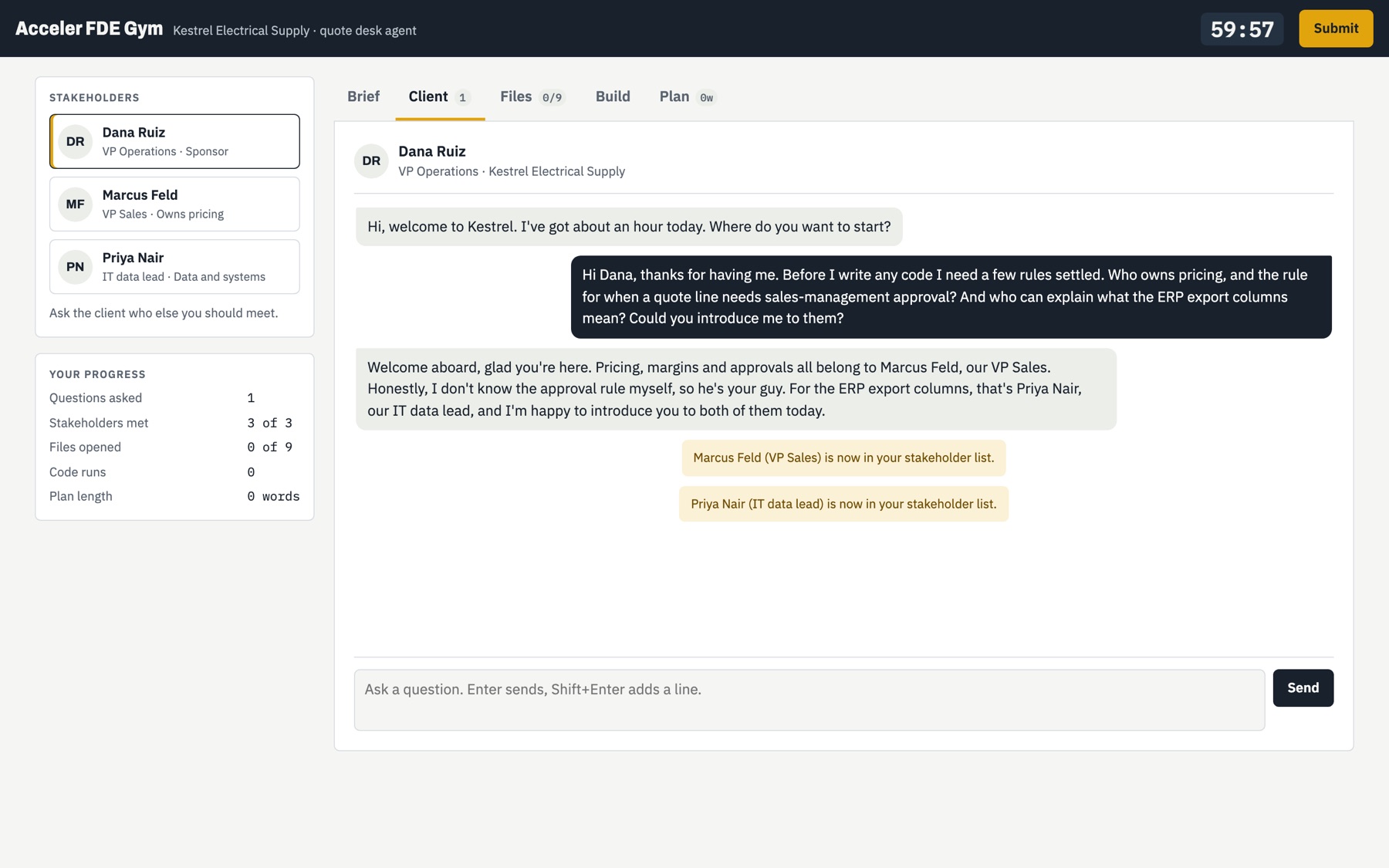
Three client staff, played by Claude. They hold 12 requirements between them and reveal each one only when asked.
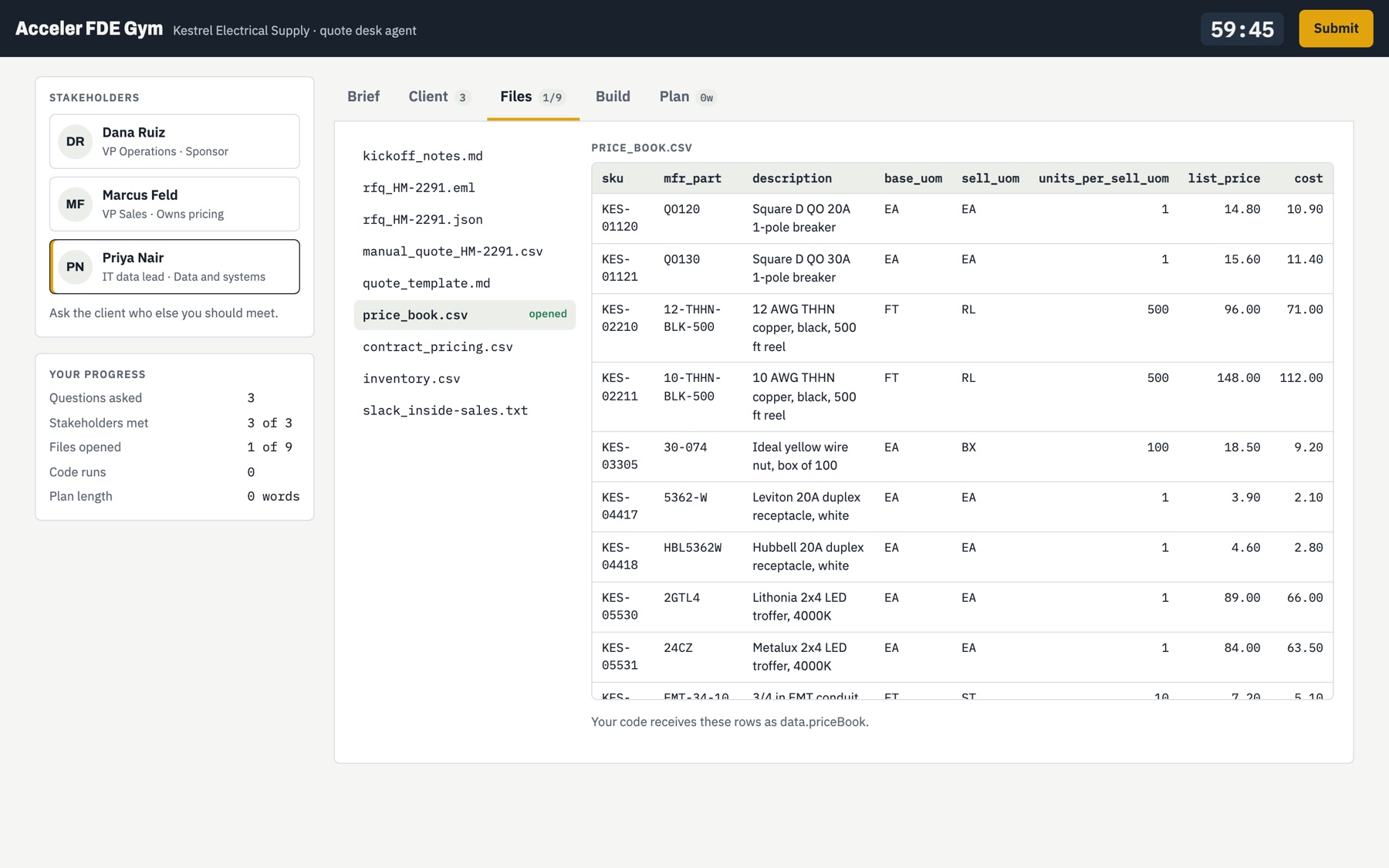
Nine files from Kestrel's systems, from the price book to a sales team Slack thread.
A sandbox for the build. The code is then tested on six requests the person never sees.
A new rule from the head of sales at minute 30.
A session, screen by screen
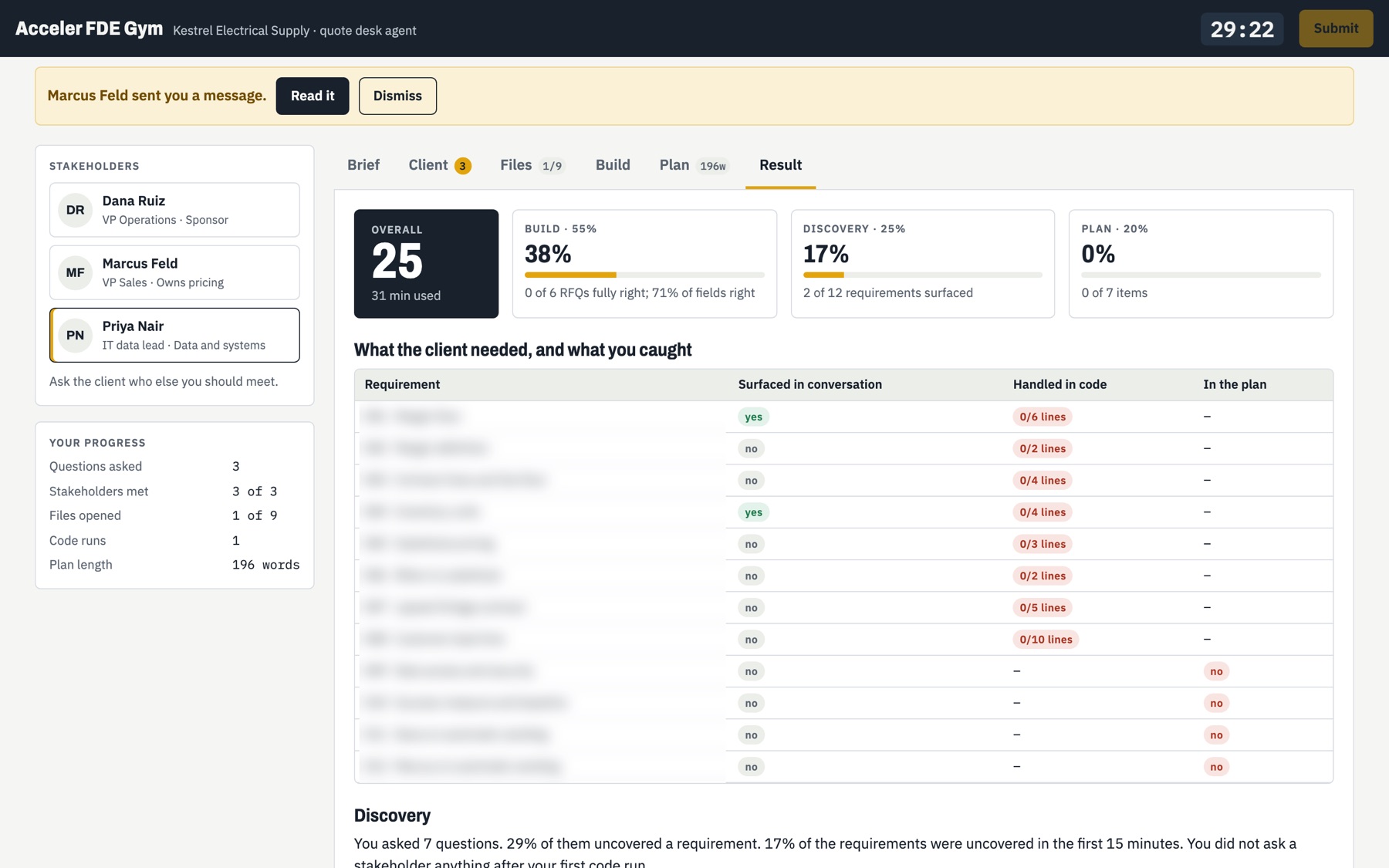
The brief: the client, the task and how it is scored.Discovery. The sponsor introduces the owners of pricing and data.The client’s data files.The result of our 31-minute demo session, by requirement. We blurred the requirement names.
How the score works
Build
55%
the six hidden requests
Discovery
25%
requirements found by asking
Plan
20%
the next two weeks
A quote that breaks one of the client's rules scores zero.
Three separate model calls judge each requirement. The majority decides.
Builders are scored on all three parts. We're adding a strategist mode that scores discovery and the plan only.
In assessment mode the person never sees the score. You can read every transcript.
How firms use the gym
Before the cohort
Pick the cohort
Every nominee takes the gym. You fill the seats from the scores.
After the cohort
Measure the change
The cohort takes the gym again on a new case. You see each person's score against their first one.
We build two or three cases from each firm's own work.